
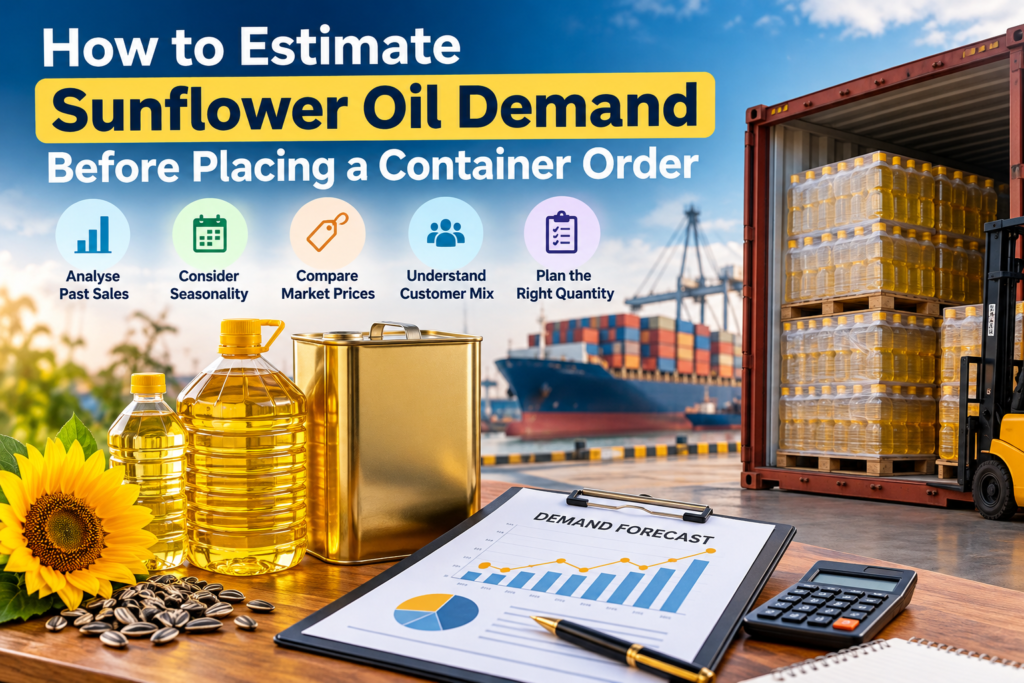
Booking a full container of edible oil is a serious commitment. Order too little and you run dry in week nine, with regular customers calling around. Order too much and your cash sits in a warehouse while the best-before date creeps closer.
A realistic understanding of sunflower oil demand is one of the most effective ways to manage inventory, protect working capital and maintain a reliable supply chain. Here is a practical approach used by experienced distributors, importers and repackers to estimate demand before placing a container order.
Good estimates start with your own numbers, not market headlines. Pull the last twelve months of invoices, split them by pack size and identify the months that experienced sales spikes. Most buyers discover their actual sunflower oil demand is 15 to 25 percent different from what they initially assumed.
A dependable exporter can also share production dates, refining batch details and realistic lead times, helping you align your forecast with the quantity that can genuinely be shipped.
What Shapes Sunflower Oil Demand?
Several commercial factors influence how much sunflower oil a distributor or importer needs to purchase. Understanding these variables helps prevent unnecessary inventory accumulation and unexpected shortages.
- Seasonality: Ramadan, festival weeks, winter frying and the wedding season can increase sunflower oil demand for approximately four to six weeks.
- Price Gap: When palm oil or soybean oil becomes cheaper, some customers switch products. Monitor the price difference every month to understand possible changes in purchasing behaviour.
- Customer Mix: Restaurants generally purchase 15 to 20 litre tins, while households prefer 1 litre and 5 litre bottles. Each customer segment has a different consumption pattern.
- Existing Inventory: Count the stock available in your warehouse and with sub-dealers before placing another order.
Why Buyers Should Plan Before Booking a Container
A shipping container carries a fixed quantity of products, which means importers cannot simply add a few extra cartons as they would with a smaller parcel order.
Buyers who plan ahead can benefit from better freight arrangements, avoid last-minute booking expenses and maintain consistent product availability. Effective sunflower oil demand planning also gives importers reliable sales data to discuss pricing, payment terms and supply agreements with exporters.
Key Business Advantages
- Better control over inventory and working capital.
- Reduced risk of product shortages.
- More efficient container utilisation.
- Improved negotiations with suppliers and exporters.
- Lower risk of holding excess inventory near its expiry date.
Understanding Demand Across Different Customer Segments
Each buyer group drives sunflower oil demand at a different speed, so relying on one average sales figure can produce misleading forecasts. Importers should calculate consumption separately for each customer category.
1. Household Consumers
Households generally purchase smaller packs, particularly 1 litre and 5 litre bottles. Their consumption is relatively consistent and provides a predictable foundation for monthly sales estimates.
2. Restaurants and Hotels
Restaurants, hotels and catering businesses consume larger quantities because of regular frying and food preparation. A commercial kitchen may use a 20 litre tin within just a few days, depending on its operations.
3. Food Manufacturers and Bakeries
Snack manufacturers, bakeries and food processing companies often purchase sunflower oil in bulk. These businesses typically require consistent product quality, larger volumes and dependable delivery schedules.
Estimate the monthly consumption of households, restaurants, distributors and industrial customers separately. Combine these figures to calculate your total expected sunflower oil demand.
Steps to Estimate Your Sunflower Oil Order
Before confirming a container booking, follow these five practical steps to calculate your purchasing requirements.
- Calculate Average Monthly Sales: Review invoices from the previous twelve months and calculate your average monthly sales in tonnes.
- Adjust for Demand Changes: Consider new customers, lost accounts, seasonal trends and changes in purchasing behaviour.
- Add Safety Stock: Maintain approximately three to four weeks of additional sales coverage to protect against unexpected delays.
- Subtract Existing Inventory: Deduct available warehouse stock and shipments already in transit from your total requirement.
- Match Container Capacity: Compare the remaining requirement with available container capacities and select a practical shipment size.
Practical Example: Calculating a Container Order
Suppose your business sells approximately 8 tonnes of sunflower oil per month.
- Monthly sales: 8 tonnes
- Transit and clearance time: 5 weeks
- Desired safety stock: 4 weeks
- Total stock coverage required: Approximately 9 weeks
- Estimated stock requirement: Approximately 17 tonnes
- Existing warehouse stock: 3 tonnes
- Additional requirement: Approximately 14 tonnes
Based on this calculation, a 20-foot container of bottled sunflower oil may be a suitable option, subject to the actual packaging configuration and container payload limits.
If sunflower oil demand is expected to increase significantly in the next quarter, consider evaluating a flexitank or a 40-foot container instead.
Sunflower Oil Packaging Options for Container Shipments
Packaging selection plays an important role in converting sunflower oil demand into practical container loads. Importers should consider product format, customer requirements, transportation costs and storage facilities before confirming packaging.
- 1 Litre PET Bottles: Suitable for supermarkets, retail distributors and household consumers. A typical 20-foot container may accommodate approximately 15 to 16 tonnes, depending on packaging and loading configuration.
- Flexitank Packaging: Suitable for bulk oil transportation. A 20-foot container can generally carry close to 22 tonnes, subject to the approved payload and equipment specifications.
- 190 KG Drums: A practical option for industrial buyers, food manufacturers and businesses requiring manageable bulk quantities.
- Large Tins: Commonly used by restaurants, hotels, catering companies and commercial kitchens.
Sunflower Oil Storage Instructions
Proper storage is essential for maintaining sunflower oil quality throughout the distribution process. Excessive heat, sunlight and improper handling can negatively affect product quality and shelf life.
- Store cartons and tins in a cool, dry warehouse, preferably below 25°C.
- Keep products away from direct sunlight and excessive heat.
- Store cartons off the floor using suitable pallets.
- Maintain clean and dry warehouse conditions.
- Check production dates and batch details when shipments arrive.
- Follow the manufacturer’s recommended shelf-life and storage instructions.
Refined sunflower oil typically carries a shelf life of approximately 12 months from production, although the actual period depends on the manufacturer’s specifications and packaging. Importers should check the production date on arrival and plan inventory rotation to sell products well before their expiry date.
Overbuying beyond actual sunflower oil demand can leave inventory ageing in the warehouse and increase the risk of financial losses.
Sunflower Oil Product Specifications
Before placing an import order, buyers should verify the technical specifications, packaging details and product documentation with their supplier.
| Specification | Details |
|---|---|
| Product Name | Refined Sunflower Oil |
| Product Type | Edible, RBD |
| Physical Condition | Liquid, clear |
| Colour | Light golden |
| Packaging | PET bottles, tins, drums and flexitank |
| Shelf Life | Approximately 12 months, subject to manufacturer specifications |
| Storage Temperature | Below 25°C, as recommended by the supplier |
| Country of Origin | To be confirmed at quotation |
Export and International Logistics Considerations
International shipping schedules must be included in your demand forecasting calculations. Sea transit for sunflower oil shipments generally takes around four to six weeks, depending on the origin port, destination port and shipping route. Customs clearance and inland transportation can add several additional days.
Importers should ideally initiate the next purchasing cycle while approximately six to seven weeks of stock remains available, adjusting this buffer according to actual supplier lead times and sales velocity.
Common International Shipping Terms
- FOB (Free On Board): The seller handles delivery and loading onto the nominated vessel at the agreed departure port. The buyer generally arranges the main ocean freight and insurance.
- CIF (Cost, Insurance and Freight): The seller arranges and pays for the ocean freight and minimum required insurance to the named destination port, subject to the agreed contract terms.
Final Thoughts
Estimating sunflower oil demand before placing a container order is an important part of successful edible oil importing and distribution. Accurate sales records, customer segmentation, seasonal adjustments and realistic shipping timelines help businesses purchase the right quantity at the right time.
Rather than relying on assumptions, build your purchasing decisions around actual sales figures, available inventory and confirmed supplier lead times. This approach helps protect working capital, minimise storage risks and maintain a dependable supply for your customers.
Request a Sunflower Oil Export Quote
Planning your next sunflower oil container shipment? Share your monthly purchasing volume, preferred packaging size and destination port. Our team can help you evaluate suitable packaging and container options based on your sunflower oil demand.