
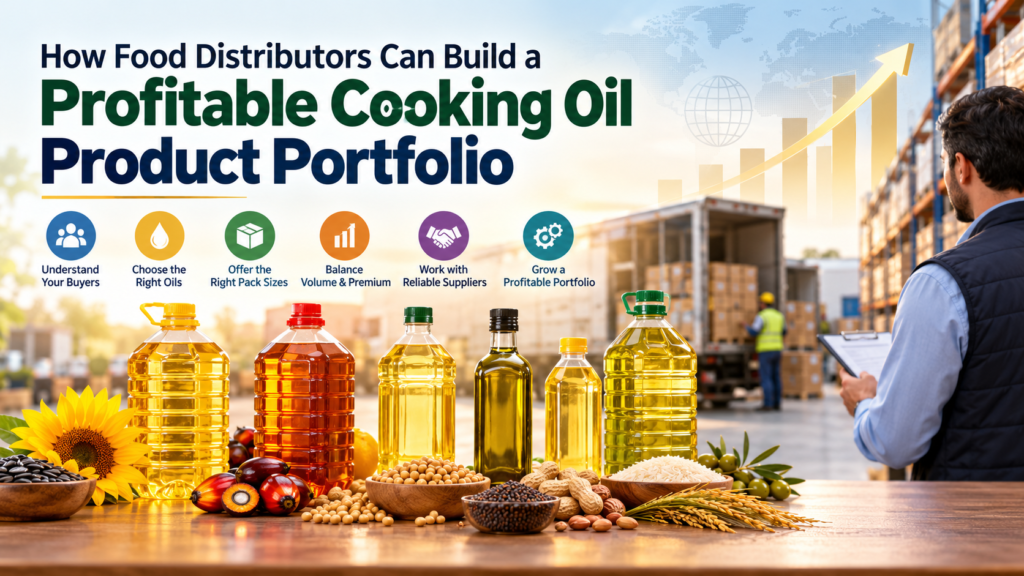
How Food Distributors Can Build a Profitable Cooking Oil Product Portfolio
If you supply food products, you already know that cooking oil is one of those categories that never really goes quiet. Restaurants fry, households cook, bakeries bake, and every one of them needs a refill on a regular schedule. That steady demand is why so many food distributors want a bigger piece of it.
Here’s the catch, though. Stocking a handful of popular brands isn’t a strategy. A profitable cooking oil product portfolio takes planning: the right mix of oils, sensible pack sizes, and a clear idea of who buys what. This guide shows how to build one without locking your cash into slow-moving stock.
Start With Your Buyers, Not the Catalogue
Before you pick a single SKU, write down who actually buys from you. A distributor serving street-food vendors needs a very different range from one supplying hotels or snack makers.
Ask a few plain questions. What do they cook most often? How much do they use each week? Do they care more about price, flavor, or shelf life? A handful of honest conversations will teach you more than any market report, and the answers make it much easier to decide which cooking oil to stock.
Cover the Core Cooking Oil Types
A balanced range usually includes a few staples plus one or two specialty picks:
- Sunflower oil: light in flavor and accepted almost everywhere, so it sells steadily.
- Palmolein: budget friendly and stable at high heat, which commercial fryers value.
- Soybean oil: neutral and affordable, common in bulk food processing.
- Mustard oil: strong flavor and very loyal buyers in certain regions.
- Groundnut oil: a favorite for deep frying and traditional cooking.
- Rice bran and olive oil: higher margins and a smaller, growing audience.
Each type of cooking oil serves a different buyer, so resist the urge to stock everything on day one. Start with three or four that match your customer base, then add more once orders prove the demand.
Match Cooking Oil Pack Sizes to How People Buy
Pack size quietly shapes your margin. Households tend to buy one-liter pouches and five-liter jars. Restaurants and caterers prefer 15-liter tins. Large processors may want drums or bulk tankers. Offering two or three sizes of each cooking oil lets you serve several customer groups with the same product, and it protects you when one segment slows down.
Balance Volume Lines With Premium Lines
Every distributor needs a few high-volume products that keep trucks moving. But volume alone rarely makes anyone rich, because margins on commodity oils are thin.
Premium cooking oil options help here. Cold-pressed, filtered, and fortified oils sell at higher prices and attract customers who care about quality. Let your basic range bring in steady cash flow while the premium range lifts overall profit. A 70/30 split is a fair starting point, though your own sales data should have the final say.
Choose Cooking Oil Suppliers You Can Rely On
Your portfolio is only as strong as the people behind it. A supplier who misses deliveries or changes quality from batch to batch will cost you customers fast. Look for clear labeling, food-safety certifications, consistent packaging, and fair payment terms.
It also helps to keep two suppliers for your best-selling cooking oil, so one delay never leaves your shelves empty. Ask for samples, check the shelf life printed on the pack, and visit the facility if you can.
Watch Prices and Stock Closely
Edible oil prices move with crop yields, import duties, and global trade news. Buy too much at a high price and you may end up selling below cost later. Buy too little and you lose orders.
Track your fastest and slowest movers every month, drop products that sit for months, and move that money into the ones that sell. Smaller, more frequent orders usually work better than one giant purchase, especially when cooking oil prices are jumpy.
Don’t Overlook Branding and Packaging
Buyers judge a product in seconds. Clean labels, clear nutrition details, and sturdy leak-proof packs signal quality before anyone tastes a thing. If you sell under your own brand, invest a little in good design. If you carry other brands, make sure the packs reach your warehouse undamaged, because a dented tin or leaking pouch hurts trust far more than it hurts your stock count.
Good presentation also helps retailers, since a shopkeeper is more likely to give shelf space to a cooking oil that looks professional.
Support Customers After the Sale
Selling is only half the job. Share simple tips with your buyers, like which oil suits frying and which suits dressings, or how to store oil away from heat and sunlight. Offer reliable delivery windows and respond quickly when something goes wrong.
Distributors who act like partners instead of just suppliers tend to keep customers for years, and repeat orders are the quiet engine behind every successful cooking oil business.
Review Your Range Every Quarter
A portfolio is never finished. Every three months, look at sales by product, margin by pack size, and feedback from customers. Which cooking oil types are growing? Which are fading? Where are competitors stepping in? Then make small adjustments rather than sweeping changes.
Final Thoughts
Building a profitable cooking oil product portfolio isn’t about carrying the most products. It’s about carrying the right ones: oils your customers need, in sizes they can use, from suppliers you trust, at prices that leave a fair margin. Start small, learn from your numbers, and grow step by step.
If you’re a food distributor ready to strengthen your cooking oil range, pick one idea from this post and try it this month. Small changes add up faster than you’d think.